We’ve raised a US$2M pre-seed to build an autonomous AEO agentWe’ve raised a US$2M pre-seed round
Read announcement
How WikiSleep Went from Zero to Showing Up Against Calm and Headspace in AI Search
WikiSleep, the science-informed sleep app built on Cognitive Diversion, used ChatFeatured to go from no measurable presence in AI search to consistent visibility across every major answer engine — in a category dominated by Calm, Headspace, and BetterSleep.
979
AI citations earned by ChatFeatured-created content, influencing 17 of 29 tracked prompts
+113%
Brand mentions across answer engines more than doubled in 30 days (478 to 1,017)
65.6%
Visibility on "audio apps with biographies for sleep," WikiSleep's strongest prompt
75–85
Sentiment score range across all models: when WikiSleep appears, it appears well
I’m so crazy impressed with ChatFeatured and its ability to get us visibility in a market that is dominated by four or five huge players. As a small company with limited budget, it’s amazing to have a tool like this to help us grow.
About WikiSleep
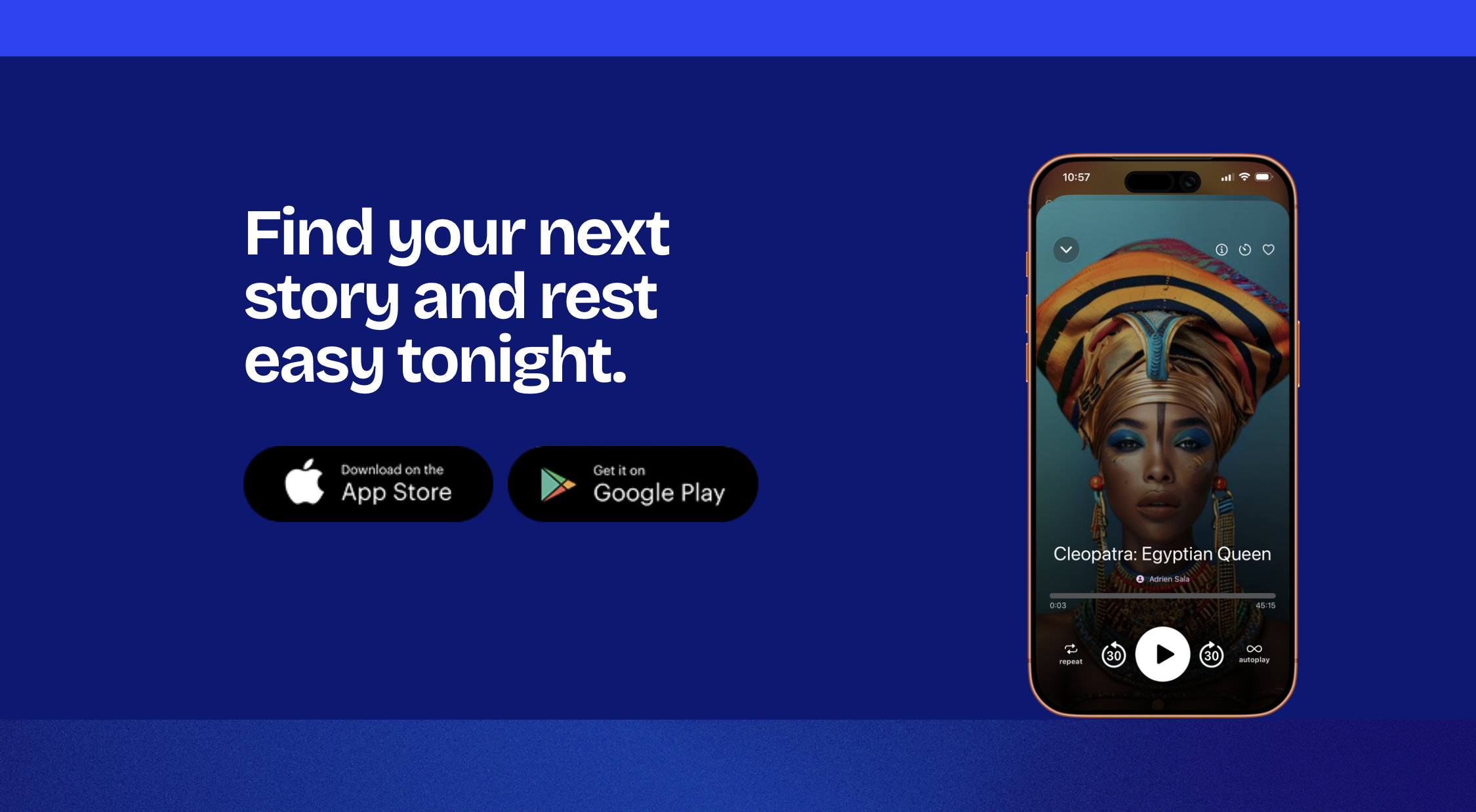
A sleep app that helps people quiet a racing mind at bedtime using engaging, gently paced stories rather than meditation or white noise. Founded by Adrien Sala, it has over 250 original stories that include biographies, curious historical events, trivia, fiction and more.
WikiSleep has a B2C presence, as well as B2B and an enterprise wellness tier.
The Opportunity
The sleep app category is one of the most crowded in consumer wellness. When someone asks ChatGPT or Perplexity "what can I listen to when my brain won't stop at night?" or "apps for falling asleep without meditation," the answers tend to default to the biggest names: Calm, Headspace, BetterSleep. Those are the brands the models have seen most.
WikiSleep has a genuinely differentiated product: cognitive diversion through stories, built for the large group of people who find meditation and breathing exercises ineffective at bedtime. But product differentiation doesn't matter if the model never surfaces you. When WikiSleep started with ChatFeatured, its visibility across the tracked prompts was effectively zero. The category conversation was happening without them.
The Solution
WikiSleep mapped the prompts that matched its actual edge — not generic "best sleep app" queries it had no chance of winning cold, but the specific, high-intent questions where its product is the better answer: "sleep apps for people who suck at mindfulness," "apps to help you sleep that aren't just guided meditation," "alternatives to white noise and nature sounds for insomnia."
ChatFeatured tracked each prompt across ChatGPT, Gemini, Google AI, Perplexity, Copilot, and Grok, surfaced where WikiSleep was absent, and identified the content gaps to fill. The team then published content aimed squarely at those prompts (the meditation-skeptic, the racing-mind insomniac, the person who wants a story rather than a breathing exercise) and tracked which pieces earned citations.
The Results
The pattern is what you want to see early: pick winnable prompts, publish content that answers them, and compound from there.
- ChatFeatured-created content earned 929 AI citations, influencing 17 of WikiSleep's 29 tracked prompts. A single article — "Best Sleep Apps for People Who Hate Meditation" — earned 642 of them, pulling citations across ChatGPT, Perplexity, Google AI, Gemini, and Grok.
- Brand mentions more than doubled, from 478 to 1,017 across answer engines — a 113% increase in 30 days.
- 65.6% visibility on "audio apps with biographies and folklore paced for sleep," with 324 mentions in 30 days.
- Multiple prompts went from 0% to meaningful share in a single window: "apps for falling asleep without breathing exercises or meditation" (0 to 29.8%), "alternatives to white noise and nature sounds for insomnia" (0 to 25.7%), "I hate meditation but need help falling asleep" (0 to 18%).
- Sentiment scored 75 to 85 across every model. WikiSleep isn't just appearing. It's being recommended in genuinely positive terms.
The content that works mirrors the product. WikiSleep's single most-cited article speaks to the exact person the app is built for: someone who's been told to meditate and knows it won't work for them. That alignment between product and content is why the citations are landing on the prompts that matter.
The Outcome
For WikiSleep, ChatFeatured turned AI search from a channel where it didn't exist into one where it's a measurable, growing presence — built deliberately, prompt by prompt, against far larger incumbents. The team now has a clear map of which conversations it's winning, which to target next, and content that earns its place in the answers.
The category leaders had a head start. WikiSleep is closing it in the channel that's increasingly where people go first when they can't sleep.